Typography shapes how people feel about your business before they even read a word. Using serif and sans serif typefaces together creates a visual rhythm that feels both classic and current. This balance helps establish trust while keeping the design fresh. You want your logo headlines to stand out without overwhelming your body text. A thoughtful mix guides the eye smoothly across different mediums.
Why mix serif and sans serif for brand identity?
Selecting the right combination signals professionalism without feeling stiff. Serifs often carry authority and history, making them ideal for headlines. Sans serifs offer clarity, which helps when someone scans details quickly. Combining them allows you to highlight important messages while maintaining readability for smaller text blocks.
If your serif is light, pair it with a heavier sans serif. This prevents the letters from blending into the same tone. High contrast usually reads better for headers. Lower contrast works when space is tight. Some designers try to make them look identical by using similar weights, but that removes the point of the pairing. You need distinct character to guide the eye through content effectively.
Where do these combinations work best?
Luxury goods often use a strong serif header paired with a clean sans body copy. Think fashion magazines or high-end jewelry sites. The serif brings history, while the sans serif ensures modern usability. For instance, many minimalistic layouts found in digital stationery projects rely on this hierarchy to remain legible at small sizes.
This approach extends beyond print materials. Digital platforms benefit from the same structural clarity. Social media platforms require quick scanning, so adapting these combinations for Pinterest posts helps maintain engagement across devices. Visual consistency builds recognition over time.
Traditional sectors like hospitality still lean on established rules. Classic applications appear frequently in wedding announcements to convey formality. You can see how this style supports event planning where elegance is the main goal. Replicating these standards in your own brand materials shows you understand industry expectations.
What goes wrong when mixing type?
A common error is picking two serifs that look like siblings. They fight for attention instead of supporting each other. Stick to one serif and one sans family per layout to keep things organized. Another issue is size mismatch. If a headline is barely larger than the body text, the hierarchy breaks. Aim for a jump in scale of at least 100% between sections.
Testing variations is key. Look at your chosen typefaces side by side. Try a font like Playfair Display for your primary serif choice. This provides ample contrast against most sans options. Remember to check how the letters behave in different weights. Thin strokes can vanish on low-quality screens.
How do I verify my selection works?
View your draft in grayscale first. Colors can hide weak structure. If the text looks muddy without color, swap out one of the families. Real-world testing on mobile devices ensures the sizing holds up under different viewports.
- Check contrast levels between the title font and the body text.
- Ensure the x-height of the sans serif matches the body text comfortably.
- Test the combination on white and dark backgrounds.
- Verify kerning feels balanced when the letters sit together.
 Sleek Font Pairings for Luxurious Social Media Pins
 Wedding Announcement Fonts with Modern Elegance
 Refined Font Pairings for Digital Stationery
 Crafting Elegance with High-End Pinterest Typography
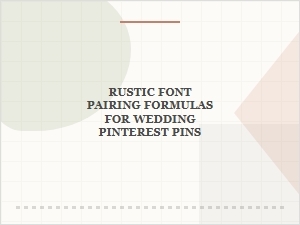 Rustic Font Formulas for Pinterest Wedding Pins
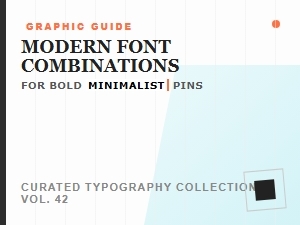 Modern Font Pairings for Minimalist Pin Designs